
maXerial AG
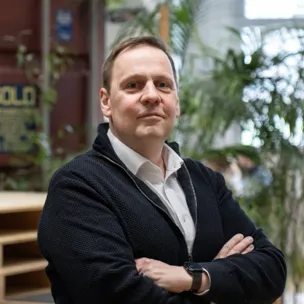 Dr. Roger Herger, CEO & Founder, maXerial AG
Roger Herger is a leading expert in industrial AI and X-ray technology with over 20 years of experience. He holds a PhD in Physics and an MSc in Chemistry, with minors in Computer Science.
Roger began his career at the Materials Science Beamline of the Swiss Light Source (Paul Scherrer Institute), developing expertise in X-ray technology. He then moved to industry, where he held various technical and management positions, including Head of Research and Testing Technology at thyssenkrupp Presta.
Roger is the Founder, CEO, and President of maXerial, a deep-tech startup based in Liechtenstein. He is dedicated to advancing AI and X-ray technology for industrial engineering and quality assurance. maXerial developed a novel hardware and software platform for training and applying industrial AI models in just 1 click.
He has authored more than 20 scientific articles and 1 book, with his work cited over 1'600 times.
Topic:
We Teach Machines to See Through Things
Abstract:
X-ray imaging and computed tomography have become primary means of inspecting what optical systems cannot reach: flip-chip bumps and Cu-pillar microbumps under the die, through-silicon and through-glass vias, solder joints of BGAs, and the internal structure of stacked assemblies. The resulting grayscale data is complex, and its evaluation in high-volume production demands automated, robust, and accurate analysis at cycle time.
The question is usually framed either as machine learning (ML) or rule-based algorithms. In production, the answer is both: rule-based methods deliver speed and determinism and can be tuned with a handful of samples when training data does not yet exist. ML handles the complexity that rules cannot easily capture, and additional physical constraints on the models keep results robust and explainable. We show how such pipelines evaluate X-ray data within inline cycle times of a few seconds, independent of the imaging hardware.
We report on first deployments in series production at leading semiconductor manufacturers and present how manufacturers, OEMs, and system integrators can work with maXerial: from software on existing X-ray systems to analysis projects and joint development.
Key Technologies Covered:
- Hybrid image analysis: machine learning combined with rule-based algorithms
- AI-based automated defect recognition (ADR) for X-ray and CT data
- Physics-informed machine learning for industrial imaging
- Hardware-agnostic inspection software: 2D X-ray, 3D laminography, CT
- Advanced packaging inspection: BGA and QFN solder joints, void detection
- Inline X-ray inspection at production cycle times
- No-code AI model training by shop floor experts
- Edge AI deployment for fully offline inference
- MLOps for industrial AI: monitoring, retraining, traceability