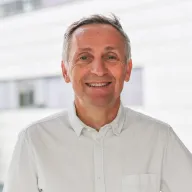
Power Semiconductors: Market-Specific Optimization from Mobility to Computing
The increasing demands of electrified transportation, renewable energy systems, and AI-driven data centers are pushing power electronics toward unprecedented requirements in efficiency, power density, reliability, and sustainability. Meeting these challenges requires moving beyond isolated device or system optimization approaches toward a global System-Technology Co-Optimization (STCO) methodology.
This presentation introduces CEA-Leti’s STCO framework for power electronics, spanning from semiconductor technologies to system-level applications. The proposed approach combines technology development, device design, packaging, converter architectures, multi-physics modeling, and application-driven system optimization within a unified co-design flow.
The talk will first present the principles of STCO, highlighting the interactions and feedback loops between technology constraints and system requirements. Several concrete project-driven examples will then illustrate how application-level specifications can guide semiconductor device targets, while technology capabilities and limitations directly influence system architectures and integration strategies. Particular emphasis will be placed on advanced modeling and virtual prototyping methodologies, including electro-thermal and EMC co-simulations, mission-profile-based aging analysis, digital twin approaches, and physics-informed AI techniques for predictive maintenance and real-time health monitoring. Particular attention will also be given to the bidirectional interactions between application requirements, converter architectures, and semiconductor technology development. The STCO approach enables the translation of system-level constraints — including efficiency, power density, switching frequency, thermal management, reliability, and cost — into specifications for future semiconductor devices, packaging solutions, and integration technologies.
In this framework, application needs and mission profiles directly guide the development of advanced technologies such as SiC, GaN, and emerging ultra-wide-bandgap (UWBG) materials including diamond. Conversely, technological innovations continuously redefine the range of achievable converter architectures, integration strategies, operating conditions, and application domains.
By coupling application-driven requirements with technology-driven opportunities, STCO provides a unified framework to accelerate innovation and enable the next generation of high-performance and reliable power electronic systems.
Key Technologies Covered
- System-technology co-optimisation (STCO)
- Advanced modeling and virtual prototyping methodologies
- Mission-profile-based aging analysis
- Wide band gap and Ultra wide band gap semiconductors
- Power conversion architectures